Stop toxic toys

I just received the following message from MomsRising.org. It invites us to sign a petition against toxins in toys. Please click on over to the site and sign the petition. Everyday toxins affect us all, but in the U.S. people of color suffer disproportionately from such toxins because toxic plants, refineries, and other pollution-causing infrastructure are built in working-class neighborhoods. If we can keep toxins out of toys, that’s one small step to protecting the next generation.

Dear MomsRising Member,

Is it just me, or are you starting to get freaked out about all these toy recalls too? Just yesterday, I sat down for a peaceful breakfast (well, as peaceful as you can get with a Cheerio food fight going on), and on the front page of the New York Times there was an announcement of yet another massive recall of toys–and in the Business Section there was a story about lead in bibs for babies. What’s next?

This must stop! There are already over 15,000 signatures on our “No Toxics in Toys” petition from last week. Let’s double that number. The Consumer Products Safety Commission (CPSC) needs the tools and authority to ensure our children’s safety. We can provide Congress with the political capital they need to pass legislation that stops toxic toys.

SIGN THE PETITION & SEND IT TO 5 FRIENDS: Help us build a massive national movement that can’t be ignored. Sign the petition at: http://www.democracyinaction.org/dia/organizationsORG/momsrising/signUp.jsp?key=2362

*Once you’ve signed the petition, please forward this email to friends, family, your book group, coworkers, school and sports lists, and favorite Big Bird fan. Let’s make a strong statement together by getting as many signers as possible.

 *Please forward this email to friends and family!

THE LOWDOWN: CPSC is an under-funded agency with an outdated regulatory authority. It needs the resources and authority to keep our children safe. It’s time to pass legislation to make sure CPSC can do its job to keep dangerous products out of our homes. Congress can take several steps to keep children safe:
1) Give real teeth and authority to CPSC to keep toxics out of toys and set firm toxic limits (since there are only guidelines now);
2) Create a third-party testing system and increase the fines for those companies who put toxics in toys;
3) Fully fund the CPSC, which has had a stagnant budget since 2005, so it can enforce the laws;
4) Increase staffing at CPSC since their current staffing is at its lowest level since the 1980s;
5) Give authority to quickly release safety warnings about imminent hazards without manufacture approval.

Two recently introduced bills in the Senate propose to do just this. Let’s make sure that Congress hears our strong support for this legislation. Our children need safe products NOW.

PASS IT ON–KEEP TOXICS AWAY FROM KIDS: Can you think of any list you have not yet posted this petition on? Any friends who have been sneaking into their children’s rooms late at night to confiscate that special Big Bird toy? Get them involved and pass the petition on so we can get as many signers as possible!

You can find the petition at http://www.democracyinaction.org/dia/organizationsORG/momsrising/signUp.jsp?key=2362

Together, we can keep our kids safe from dangerous toxic products and focus on more important things, like protecting them from flying Cheerios.

Best –Donna, Katie, Joan, Mary, Kristin, and the MomsRising Team

P.S. GET THE LATEST RECALL NOTICES VIA EMAIL: CPSC has an easy and handy service that will email recall notices right to your inbox! Just go to their website – www.cpsc.gov/cpsclist.aspx – and simply provide them with your e-mail address.

P.P. S. For more information:
* Coverage in the New York Times: http://www.nytimes.com/2007/08/15/business/worldbusiness/15imports.html?_r=1&oref=slogin
* Bib Recall information: http://www.nytimes.com/2007/08/15/business/15lead.html
* CPSC Info on the Fisher-Price recall: http://www.cpsc.gov/cpscpub/prerel/prhtml07/07257.html
* CBS News story on Fisher-Price recall: http://www.cbsnews.com/stories/2007/08/01/national/main3124623_page2.shtml
* Center for Disease Control web site about lead poisoning: http://www.cdc.gov/nceh/lead/faq/about.htm
* List of recalled children’s products: http://www.cpsc.gov/cpscpub/prerel/category/child.html

Etsy finds: Indian dolls and Hindi doll

Check out these cute handmade multicultural dolls and ethnic dolls I found on Etsy.

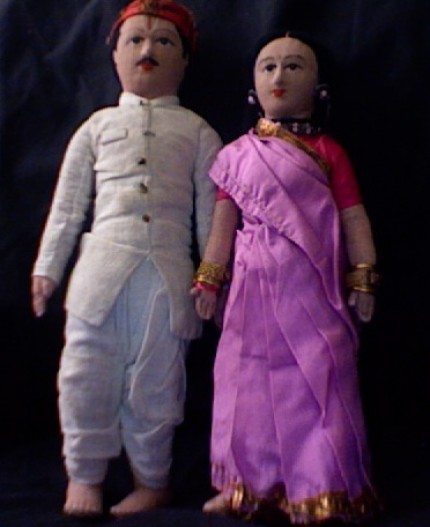
Vintage bride and groom dolls from India, $15, available at safsgallery:

indianbridegroom.jpg

Folk-tale Indian princess doll, $90, available from dollydrops:

saridoll.jpg

Hindi girl – Funky Folks ragdoll, $55, available from YourFunkyGrandma:

hindigirl.jpg

If you give these dolls a home, you’re not only purchasing some one-of-a-kind dolls, but you’re also supporting artisan doll makers instead of the toy monopolies that recently have exposed our children to lead-based paint and other dangers.

If you do buy the Indian dolls or the Hindi doll, please let the artists know you saw them on MulticulturalToyBox.com! Thanks!

Ethnic dolls from U.S. history

There are historical precedents for the mass production of ethnic dolls. Did you know Marcus Garvey set up a factory to produce black dolls?

In a darker era in U.S. history, companies produced racist caricatures of many ethnic groups, but especially of African Americans. These toys and collectibles are featured at The Jim Crow Museum of Racist Memorabilia. (Click on the link, then scroll down for a menu of categories of caricature.)
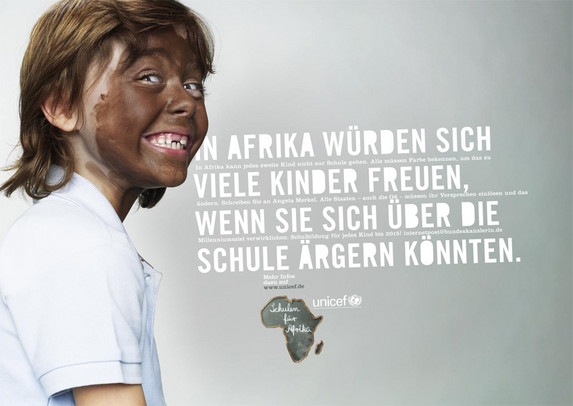
Curator David Pilgrim explains why the museum collects racist memorabilia.

The human cost of toy production in China

At The Evening Standard web site, there’s a heart-wrenching excerpt from The Real Toy Story, Eric Clark’s book about the toy industry. It’s an argument for buying toys–albeit more expensive ones–from local artists instead of supporting sweatshops run by major toy companies–especially in light of recent recalls of toys coming out of those factories. Here’s a brief passage from the book:

She is still there at midnight, when everyone in the village has long been asleep, but the workers are only just off shift, too tired even to grumble as they wait in line. Sometimes, the girl beside her says, ‘there is no water even to brush your teeth, and the toilet is horrible.’ The water (which, like lavatory paper, Li Mei is charged for) is cold. By 2am she is finally in her lower bunk bed, separated from the hard surface by a straw mat even thinner than the one she uses at home. Next morning she has no breakfast, for it is a meal she has to buy and prepare herself. At 7.30am, in factory uniform of blue blouse with a white collar over trousers with her ID card displayed (she would be fined two days’ wages if it was lost), she follows her guide through passages lined with cardboard boxes. The air in the spraying and colouring department is filled with paint dust and smells sourly of chemicals -acetone, ethylene, trichloride, benzene.

Want to buy the book? Get it at independent bookseller Powell’s Books.

Mattel promotes multicultural dolls

Mattel is promoting new Latina versions of Barbie, based on the Latina pop group RBD. The dolls are available in stores in the U.S. now, and will be in Latin America and some European countries by the fall.
barbierbd.jpg

I think the dolls are a step in the right direction, both in terms of appealing to the Latina market and increasing the ethnic diversity of dolls on the shelves. That said, thse dolls still promote an unrealistic body type. Still, I’d rather my child play with these dolls instead of a
traditional blonde Barbie.

Why do black girls still prefer white dolls?

Diversity Inc. reports on a young filmmaker who has revisited Kenneth Clark’s famous 1954 test on black girls’ doll preferences. The article quotes filmmaker Kiri Davis, who is 17 years old, as saying she was inspired to repeat the experiments to see if black girls’ preferences had changed. Her results? Sixteen of 21 girls surveyed preferred white to black dolls–and in fact, according to the experiment, such girls see black dolls as “bad” and white dolls as “good.”

You can read some notes by Davis and view the film at Google Video.

People aren’t sure what causes the girls to see black dolls as less desirable or less valuable than white dolls. Marketing of white dolls? Low self-esteem about black girls? A combination of the two, or something else entirely? What are your thoughts?

Kmart features multicultural dolls

The Associated Press is reporting that major U.S. retailer
Kmart is pinning hopes of a recovery from slumping sales on an initiative to showcase “ethnic” or multicultural dolls on its store shelves. The difference between these dolls and dark-skinned Barbie dolls? Greater authenticity. According to the AP,

“The next generation of dolls have diverse eyes, noses and mouths instead of the traditional “white” dolls whose skin was dyed and whose hair was tinted in a darker shade.”

Competition for this market is fierce. Also from the article:

But the retailer likely faces an uphill battle as it tries to woo shoppers away from heavyweight competitors Wal-Mart and Toys “R” Us, whose large selections of the popular Barbie and Bratz dolls give them an even bigger advantage in appealing to minority shoppers. “I think they’re going down a very tough road,” said toy analyst Jim Silver, editor of Toy Wishes magazine. “Why would I buy a generic ethnic doll over this major brand that has all these accessories?”